
The Future of DC Statehood | Articles & Vids That Caught Our Eye | Why Some African Americans Are Choosing to Sit Out Protests

🟣 Opening Note
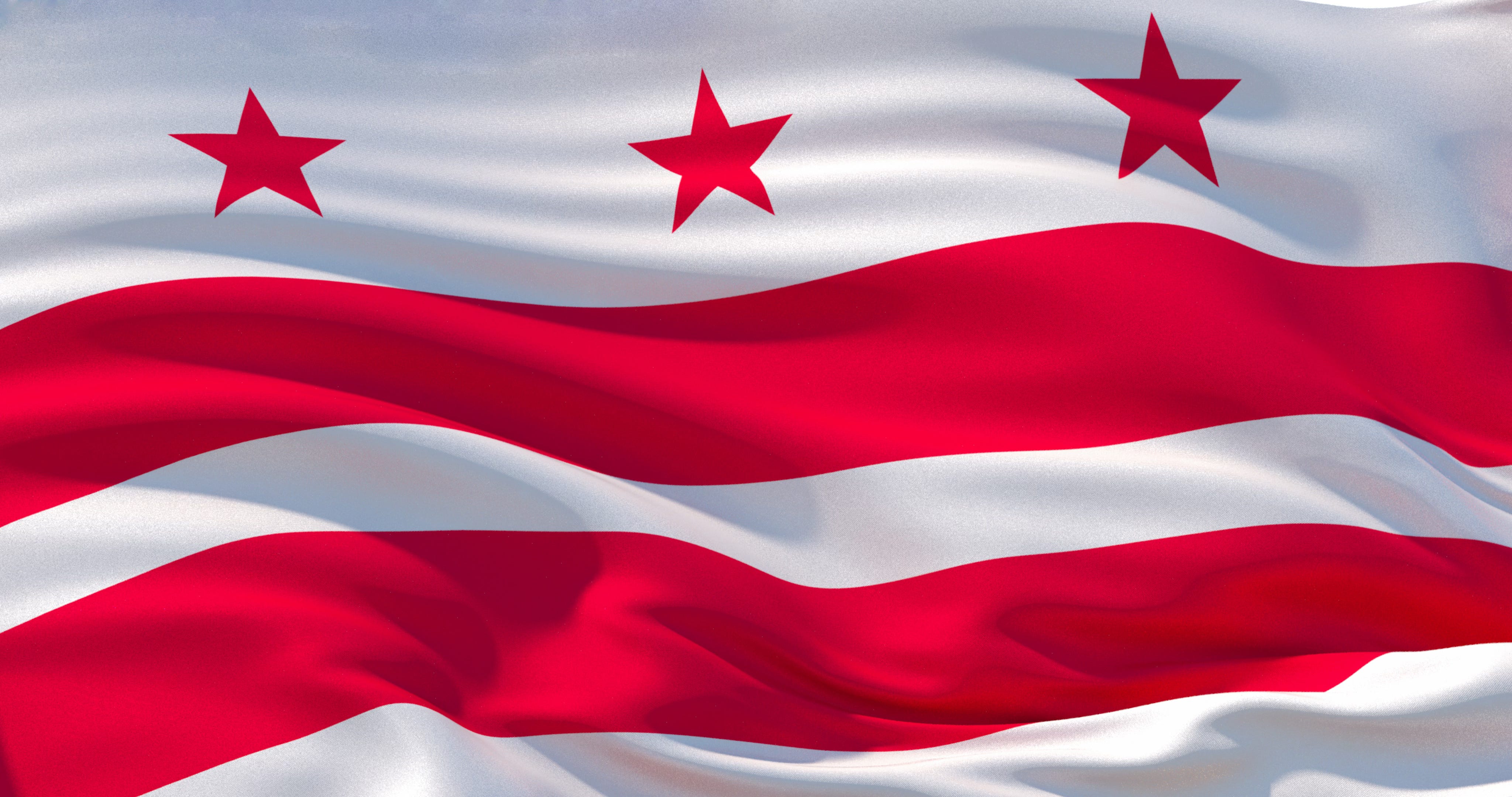
The Future of DC Statehood and the Trump Effect
“Taxation without representation” isn’t a relic of colonial history — it’s the daily reality for over 700,000 residents of the nation’s capital.
As a long-time resident of the District of Columbia, I’ve witnessed the decades-long fight for DC statehood. This effort has hovered on the edges of national consciousness — always urgent for the people who live it, but rarely a priority for those in power. Despite passionate organizing, moral clarity, and a deep historical record of civic engagement, District residents remain disenfranchised in the very democracy it helps to sustain.
Our citizens pay federal taxes, serve in the military, and contribute to the national economy. Yet we are denied a voting voice in Congress — a contradiction that cuts at the heart of democratic ideals. To us, statehood is not just a policy proposal — it’s a litmus test for the health of American democracy.
And yet, as we transition to another volatile election cycle, the road to statehood seems more uncertain than ever. A Trump-aligned conservative movement — emboldened by court rulings, gerrymandering, and state-level voter suppression efforts — is actively reshaping the political terrain. In this new era of aggressive federal rollback and authoritarian flirtations, the very notion of expanding democratic participation is seen not as a worthy goal, but as an existential threat.
Opposition to DC statehood isn’t just legalistic; it’s deeply political. Critics often cite constitutional concerns, arguing that statehood violates the Founders’ original intent. However this legal argument has been thoroughly challenged by constitutional scholars. The more candid reason lies in party politics: DC statehood would almost certainly result in two new Democratic senators and at least one House representative, tipping the scales in an already razor-thin Congress. That reality alone has made the issue radioactive — not just for Republicans, but for some moderate Democrats wary of redefining the balance of power.
Race has always played an unspoken but undeniable role in the District’s political status. In 1957, Washington, D.C.’s Black population surpassed 50%, and by 1970—during its heyday as “Chocolate City”—more than 71% of residents were Black. This demographic reality complicated the push for statehood, raising the stakes around political power and representation. Currently, due to expanding gentrification and other socio-economic forces, that figure has declined to just over 40%. While D.C. remains a majority-minority city, the fact that 77% of its voters are registered Democrats continues to fuel quiet resistance to granting it full statehood. For some, the prospect of increasing Black and brown political power is perceived not as a long-overdue correction to centuries of disenfranchisement—but as a threat.
Still, despite the obstacles, DC residents continue to push. They organize. They lobby. They vote. They protest. All in pursuit of a seat at a table they’ve long been forced to set but never allowed to sit at.
So what can be done?
For one, the movement must expand beyond the borders of the District. Statehood must be framed as a national issue — not a local anomaly. Just as voter suppression in Georgia or gerrymandering in North Carolina affects the health of democracy everywhere, so too does the denial of representation for DC. The case must be made on moral, legal, and political grounds — but it must also be made persistently and visibly.
Achieving statehood will require strategic coalition-building, relentless grassroots advocacy, sustained media focus, and genuine political courage. The Democratic Party must be held accountable so that when it once again controls the levers of power in Washington, it is compelled to act—not with symbolic gestures, but with meaningful legislative intent. The path won’t be easy. It never has been. But history shows that when pressure is consistent and the message is unmistakable, change can—and does—break through, even against entrenched power.
And so, as we explore the politics of protest in this and future issues of Intersection DC, it’s worth remembering that the fight for DC statehood is, itself, a protest — a slow, grinding demand to be counted. A demand to be heard. And, ultimately, a demand to belong fully to the democracy we are asked to believe in.
The Briefing
Global Markets Sink as U.S. Implements Punishing Tariffs
Biden's closest advisers were in 'denial' about his decline, 'Uncharted' author says
The Playback
From My Desk to Your Hands—Don’t Miss Out!

Deep Dive
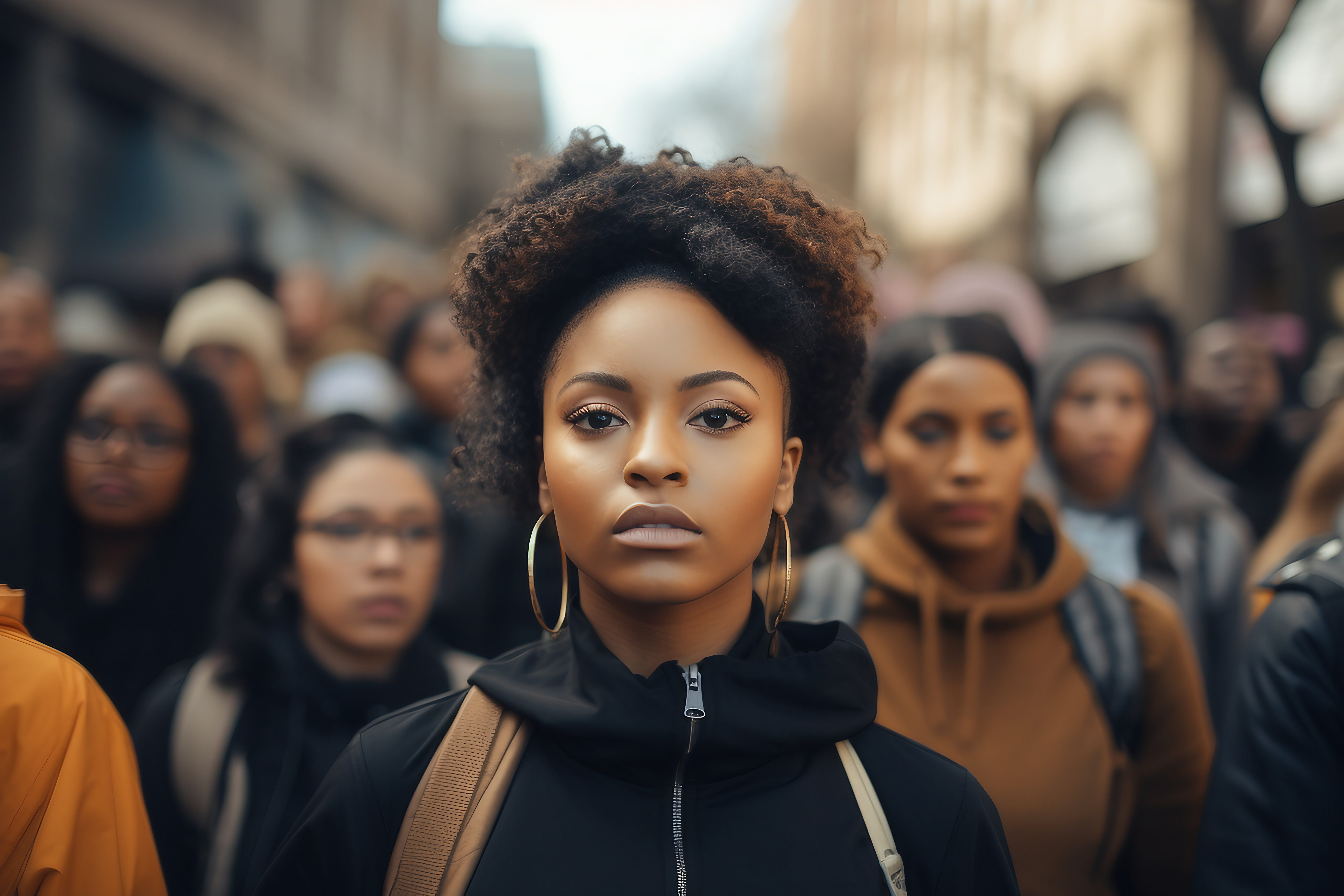
Why Some African Americans Are Choosing to Sit Out Upcoming Protests
“Silence is not absence. Stillness is not surrender.”
As protests once again stir across the country—over Trump Administration policies, Gaza, immigration, and a host of urgent issues—something feels different. In many Black communities, the instinctive fervency to take to the streets is not burning as hot. The familiar rhythm of feet on pavement, bullhorns raised high, and chants for justice has been replaced by silence—not indifference, but pause, which neither accident nor unprecedented.
African Americans have long carried the emotional, physical, and political weight of this country's democratic experiments. From abolition to civil rights to Black Lives Matter, Black protest has powered movements for change. And yet, it’s often been met with betrayal, marginalization, or a quiet demand that Black voices be loud for others—even when those same voices are met with silence in return. Yet Black people continued to show up and speak out again and again, but were left alone in many instances to carry the weight.
The protest fatigue felt by many today echoes the exhaustion of the post-Civil Rights era, when the promises of the Voting Rights Act and the Civil Rights Act were swiftly undermined by mass incarceration, white flight, and economic divestment. Black communities that marched for justice were met instead with disinvestment in public schools, redlined neighborhoods, underemployment, and broken trust. The system failed us.
Now, a new generation is facing its own reckoning. The hope once symbolized by the Obama era has given way to harsh reminders of how fragile progress can be. Federal protections for voting rights are being gutted. The George Floyd Justice in Policing Act stalled in Congress. The equity promised during the pandemic has faded into more of the same: systemic neglect and political backsliding. Concurrently, the shifting allegiances of other marginalized groups have raised eyebrows.
In 2024, a noticeable percentage of Latino and Arab American voters chose to withhold support from the Democratic ticket, often motivated by singular or localized grievances. While political self-interest is not inherently problematic, many African American voters observed that this withholding was not accompanied by reciprocal advocacy on issues central to Black communities—particularly the enduring scourges of police violence, anti-Black racism, and the assault on voting access.
That lack of solidarity has not gone unnoticed. A rising chorus within the Black community is asking hard but necessary questions: Where are our allies when we need them? Why are we always expected to rally for others, while our struggles remain footnotes? What is owed to those who have led, sacrificed, and remained loyal to the cause of progress—often without thanks or tangible return?
Sitting out of protests isn’t about disengagement. It’s about strategy, preservation, and a refusal to be exploited. It’s a recognition of a long history in which Black labor, sacrifice, and outrage have too often served as energy for others’ agendas.
To understand this moment, it helps to look in life’s mirror. During the early 1970s, after the passage of landmark civil rights legislation, a similar quietude spread across Black America—not from apathy, but from recalibration. Rather than continue marching, many activists turned inward, building community institutions, creating independent Black media, investing in local politics, and founding civic organizations. That pause birthed power—from the Congressional Black Caucus to a generation of Black mayors and local leaders who redefined what grassroots governance could look like.
And yet, it would be a mistake to assume that silence today means surrender.
In the tradition of Fannie Lou Hamer, Ella Baker, and Malcolm X, withdrawal has often preceded reinvention—a new way of organizing, one rooted not in spectacle but in strategy, not in noise but in network. Perhaps this is not an end to protest, but a recalibration of it—one that asks: What does liberation look like when we stop asking for permission to be heard?
On Our Radar
Small-Dollar Donors are Asking John Fetterman for Their Money Back
Why Elite Colleges Aren’t Pushing Back on Trump, and Why Silence Is Dangerous
Trump tariffs live: China raises duties to 84% on US goods in retaliation
Top US companies spent three times as much on buybacks than on taxes after Trump tax cuts – report
On The Screen
Upcoming Events

EVENT SPOTLIGHT: State of the Media Public Forum
Hosted by Hampton University's Scripps Howard School of Journalism and Communications
Engage with media leaders in a critical discussion on the current and future landscape of American media.
Date: Wednesday, April 23, 2025
Time: 4:30 PM ET
Location: Ogden Hall, Hampton University (also available via livestream)
Featured Panelist:
Rashida Jones, Former President of MSNBC and Hampton University alumna.
Additional Panelists:
Maurice Jones, Vice President of News, WHRO Public Media
Angilee Shah, CEO and Editor-in-Chief, Charlottesville Tomorrow
Karima Haynes, Director of Reporting Fellows Program, Pulitzer Center
Jeffrey Reece, Director of Content, Virginian-Pilot
Melinda Coleau, Planning Manager, WRC NBC 4/WZDC Telemundo 44
Moderator:
Nyla Cross, Hampton University journalism student and Harvard Du Bois Scholar
This free event is open to the public and aims to address challenges and opportunities in journalism today.
Details & Livestream: home.hamptonu.edu/public-forum
EVENT SPOTLIGHT: On The Future – An Atlantic Festival Event
Hosted by The Atlantic
Join influential leaders across industries to explore how recent shifts in politics and policy are transforming domestic and international dynamics.
Date: Tuesday, April 29, 2025
Time: 12:00 PM ET
Location: Planet Word, Washington, D.C. (also available virtually)
Speakers Include:
Tim Alberta, Staff Writer, The Atlantic
Anne Applebaum, Staff Writer, The Atlantic
Francis Collins, Former Director, National Institutes of Health
Jemele Hill, Contributing Writer, The Atlantic
Ezra Klein, Columnist and Podcast Host
Registration:
In-person and virtual passes available.
More Information: theatlantic.com/live/on-the-future-atlantic-festival-event-2025
EVENT SPOTLIGHT: Roundtable on Black Global Politics
Hosted by the Council on Foreign Relations
Engage in a thought-provoking discussion on the influence and impact of Black global politics in contemporary international relations.
Date: Wednesday, April 30, 2025
Time: 10:00 AM ET
Location: Council on Foreign Relations, Washington, D.C. (also available virtually)
Discussion Topics:
Transnational Black political movements
Influence of Black leaders in global diplomacy
Strategies for amplifying Black voices in international policy
Registration:
Open to members and the public; registration required.
More Information: cfr.org/event
EVENT SPOTLIGHT: A. Philip Randolph Institute Policy Breakfast
Hosted by the A. Philip Randolph Institute
Join labor leaders and policymakers for a breakfast discussion on civil rights and labor movements.
Date: Saturday, May 10, 2025
Time: 8:30 AM ET
Location: AFL-CIO Headquarters, Washington, D.C.
Agenda Highlights:
Keynote address by a prominent civil rights leader
Panel discussions on labor rights in the modern era
Networking opportunities with labor activists and policymakers
Registration:
Open to the public; RSVP required.
More Information: apri.org/53rd-conference-agenda
EVENT SPOTLIGHT: HBCU Voices in Government
Hosted by Howard University
A summit highlighting the contributions and pathways for HBCU graduates in public service.
Date: Wednesday, May 14, 2025
Time: 9:00 AM – 4:00 PM ET
Location: Howard University, Washington, D.C.
Program Includes:
Panels with HBCU alumni serving in government roles
Workshops on career development in public service
Networking sessions with government recruiters
Registration:
Free event; registration required.
More Information: events.howard.edu
Quote of the Week
“The press is so powerful in its image-making role, it can make the criminal look like the victim and the victim look like the criminal. If you’re not careful, the media will have you hating the people who are being oppressed and loving the people who are doing the oppressing.”
— Malcolm X
🔐 Enjoying this perspective?
This piece is part of the premium content available to paid subscribers of Intersection DC. If you found this analysis thought-provoking, consider becoming a supporter to access exclusive deep dives, video commentary, interviews, and more.