
Reality Check: Why Trump's Bid for African American Votes Faces Hurdles

There has been much discussion around the belief that significant numbers of African Americans are shifting their allegiances from President Joe Biden to Donald Trump, a misogynistic insurrectionist who is facing 91 felony counts. This is important to note considering that the respect for the rule of law among the broader African American community exists despite our negative experiences with the criminal justice and legal systems. Yet, if this transformation is occurring, what are the factors behind it?
First, it's common knowledge that African American voters have historically been a key constituency for the Democratic Party. This fidelity has been rooted in a variety of factors, including the party's historical support for civil rights legislation, social welfare programs, and efforts to address systemic inequalities. While there is diversity of opinion and ideology within any demographic group, and it's not uncommon for some individuals to deviate from the perceived norm, African Americans have largely continued to support Democratic candidates and their platforms.
In recent years, there has been speculation about a potential deviation in African American voter support, particularly in the context of the 2020 presidential election. Some analysts have pointed to anecdotal evidence suggesting that certain segments of the African American community may be reevaluating their political loyalties. Factors such as dissatisfaction with the status quo, disillusionment with traditional Democratic policies, or a desire for change could potentially contribute to this circumstance, although I've yet to meet or talk with a Black voter who will admit that he or she is considering Trump as an alternative in 2024.
On the other hand, it's essential to approach such claims with caution and scrutinize the evidence supporting them. While there may indeed be individual African Americans who choose to support Trump or other Republican candidates, it's unclear whether these instances represent a broader trend within the community. Moreover, it's important to consider the broader context in which these shifts occur, including the overall demographic composition of African American voters and the influence of other factors such as age, education, socioeconomic status, and geographic location.
According to Emory University political scientist Alan Abramowitz in a recent Intelligencer article, six major national polls showed Trump receiving an average of 18% of the vote among African Americans. This would represent the most support among this group of any Republican Presidential candidate in the last 60 years and it would stand in stark comparison to the 2020 election in which Biden won 92%. But the question that begs to be answered is why a large segment of African American voters would align themselves with Trump, given his history?
Since he emerged as a public figure in the early 1970s, Donald Trump has maintained a complex and often controversial relationship with various demographic groups. Among these groups, African American voters have been rightfully skeptical of Trump's policies, rhetoric, and actions. Any principled observer of Trump's trajectory from a New York developer to a dominant American political figure should have no problem understanding why the lion's share of African American voters find it inconceivable to support him.
It's been well documented that Donald Trump began his career as a New York real estate developer in the early 1970s, inheriting a substantial fortune from his father, Fred. Despite claims of being a self-made man, Trump benefited from significant financial backing and familial connections. His early ventures, such as the development of properties like Trump Tower and the Grand Hyatt Hotel, propelled him into the public eye. However, even in these early stages, Trump faced accusations of racial discrimination in his real estate practices.
In 1973, the U.S. Department of Justice sued Trump Management Corporation for violating the Fair Housing Act by discriminating against African American applicants. The company settled the lawsuit without admitting guilt, but this incident marked the beginning of Trump's reputation for prejudicial practices in housing. Subsequent investigations and reports continued to shed light on preferential rental practices within Trump properties, reinforcing distrust among African American communities.
In 1989, Trump took out full-page ads in New York City newspapers advocating for the death penalty following the arrest of five African American and Latino teenagers, known as the Central Park Five, for the assault and rape of a white jogger. Despite DNA evidence exonerating them in 2002 and their convictions being vacated, Trump continued to assert their guilt, refusing to apologize or acknowledge his role in perpetuating a false narrative that contributed to their wrongful convictions.
During Barack Obama's presidency, Trump became a prominent figure in the "Birther" movement, falsely claiming that Obama was not born in the United States and thus ineligible to be president. This racially charged conspiracy theory served as an effort to delegitimize the first African American president and reinforce racist narratives questioning the citizenship and legitimacy of Black leaders.
Throughout his political career, Trump's rhetoric and policies have often been perceived as racially divisive or insensitive. From referring to African nations as "shithole countries" to defending Confederate monuments and equivocating on matters of white supremacy, Trump's statements and actions have consistently alienated African American voters.
In 2020, amid nationwide protests against racial injustice and police brutality following the murder of George Floyd, Trump's response further exacerbated tensions. His calls for "law and order," deployment of federal forces against protesters, and dismissive attitude towards the Black Lives Matter movement underscored his administration's failure to address systemic racism and police violence.
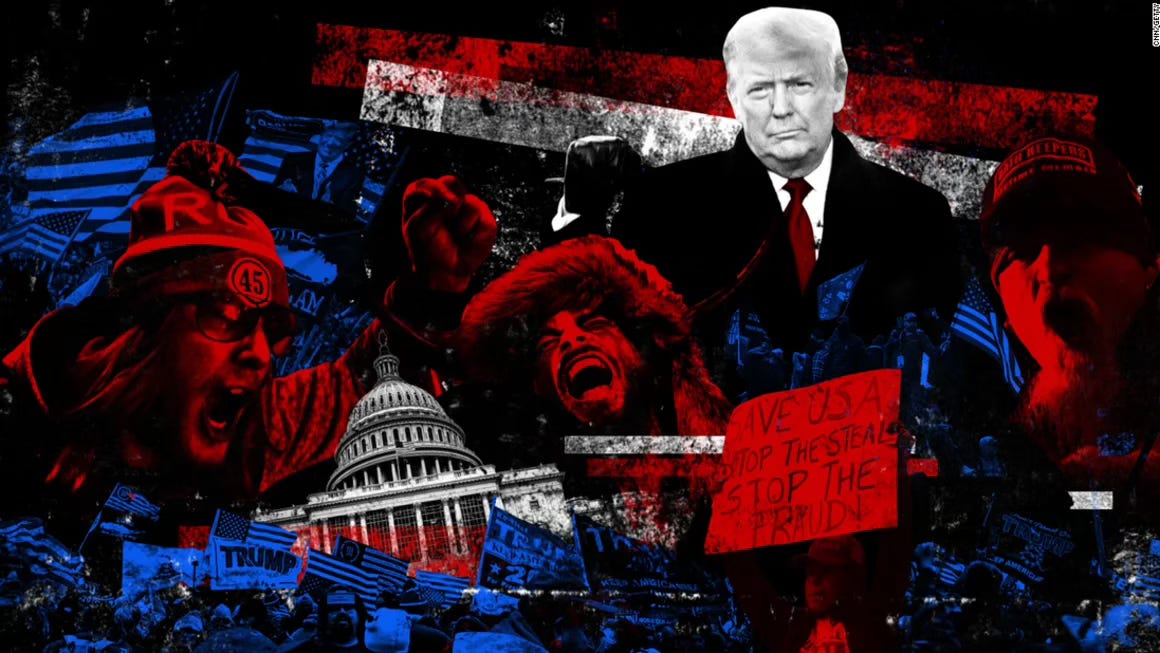
However, for many Americans, the events of January 6th, 2021 were ultimately a bridge too far. Supporters of Donald Trump stormed the United States Capitol in an unprecedented act of insurrection, seeking to overturn the results of the 2020 presidential election. Trump had spent weeks falsely claiming widespread voter fraud and encouraging his supporters to reject the outcome of the election, particularly targeting predominantly Black communities in cities like Detroit, Philadelphia, and Atlanta.
During the insurrection, which resulted in multiple deaths and widespread destruction, Trump initially resisted calls to intervene and only reluctantly urged his supporters to "go home" while continuing to assert the falsehood that the election had been stolen from him. His failure to swiftly and unequivocally condemn the violence perpetrated by his supporters, many of whom displayed white supremacist symbols and Confederate flags, further inflamed tensions. This led to his second impeachment by the House of Representatives. For many African American voters, particularly those who have historically faced disenfranchisement and suppression of their votes, Trump's role in fomenting an attack on the heart of American democracy was a stark reminder of the threats posed by his presidency.
Given this history, it's beyond reason why any African American voter would consider casting a ballot for Trump. I get that the economic despair that many Blacks are experiencing is giving them pause. But what isn't understood is that much of this suffering is occurring in red states with GOP leaders who refuse to expand Medicaid, provide acceptable unemployment wages, and offer other social safety net measures, which the President of the United States doesn't control.
On the polling front, Abromowitz believes that a change in polling needs to occur to get more accurate results. Current polls that show increased numbers for Trump "may represent an illusion based on limited samples that can and should be addressed by surveys oversampling Black voters to get a more accurate look at what’s happening." In addition, the Biden campaign can stifle any growth in Trump's numbers by aggressively and repeatedly hammering him on the issues and his past.
Meanwhile, Trump is planning his Administration of "Retribution" that will negatively and disproportionately affect Black and Brown America. From reinstituting "Stop and Frisk" to sending the National Guard into cities to establishing and implementing a massive deportation program, a second Trump presidency would be a disaster for communities of color. With Democracy on the line and an unstable adolescent potentially at the helm of the ship of state, the consequences are far too ominous for Black voters to flirt with Trump or sit this election out. You've been warned.
What we are reading
Fields of Green Chinese Mafias and the U.S. Black Market for Marijuana
Israel’s war on Gaza live: New wave of displacement as Israel attacks Rafah
Just how low will Republican politicians stoop to be Trump’s running mate?
This article and its supporting clear evidence was expertly written. His approach was well balanced by asking the reader to assess this information for themselves, while presenting Facts for them to consider. There was a myriad of facts from the 1970's up to today without realy mementioning the criminals cases and suspected sexual harrassment cases. Nor did he mention Trump's attitude that selling high top basketball shoes will appeal to A-A and gain their vote! NO we are not that stupid like those who believe that it makes sense and will work. Please check those polls for realistic algorithms!!